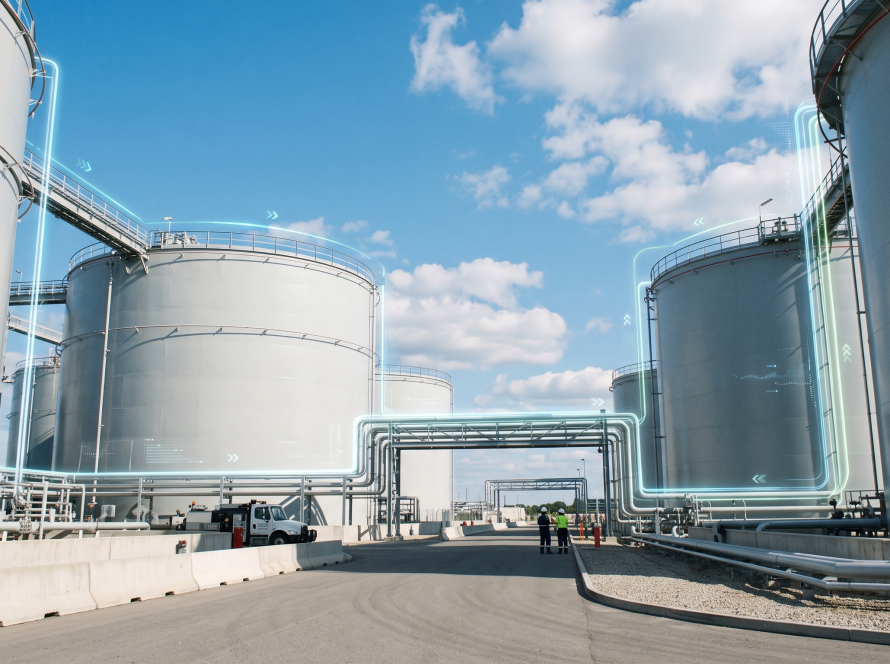
For decades, cleaning industrial storage tanks required workers to enter confined spaces filled with hazardous residues, toxic vapors, and limited ventilation. While strict safety procedures have reduced risks, confined space entry remains one of the most dangerous maintenance activities in the energy industry.
Today, robotic tank cleaning is transforming how energy companies approach tank maintenance. By using remotely operated robotic systems, businesses can clean tanks more safely, efficiently, and cost-effectively while minimizing the need for personnel to enter hazardous environments.
As safety regulations become stricter and companies seek more sustainable maintenance practices, robotic cleaning technology is quickly becoming the preferred solution for refineries, terminals, petrochemical facilities, and storage operations.
In this guide, we’ll explore why robotic tank cleaning is replacing traditional confined space entry, the benefits it offers, and how it helps improve operational performance across the energy sector.
The Risks of Traditional Confined Space Entry
Storage tanks often contain hazardous materials long after they are taken out of service. Residual hydrocarbons, sludge, chemical deposits, and toxic gases can create dangerous working conditions.
Confined space entry introduces several risks, including oxygen-deficient environments, toxic gas exposure, fire and explosion hazards, heat stress, slips and falls, limited emergency access, and worker fatigue.
Although comprehensive safety procedures and training reduce these risks, eliminating worker exposure altogether is an even more effective solution.
What Is Robotic Tank Cleaning?
Robotic tank cleaning uses remotely operated equipment to remove sludge, sediment, hydrocarbons, and other contaminants from industrial storage tanks without requiring workers to enter the confined space.
Advanced robotic tank cleaning systems typically include remote-controlled cleaning units, high-pressure water jetting, vacuum recovery, sludge pumping technology, real-time camera monitoring, and precision manoeuvrability controls.
Operators remain outside the tank while directing the equipment remotely, greatly improving workplace safety.
Why the Energy Sector Is Adopting Robotic Tank Cleaning
The energy industry continuously seeks ways to improve safety while reducing operational costs.
Robotic cleaning technology addresses both objectives.
Improved Worker Safety
The greatest advantage of robotic tank cleaning is minimizing confined space entry.
Keeping workers outside hazardous tanks significantly reduces exposure to dangerous atmospheres, combustible gases, and physical hazards.
Fewer personnel inside confined spaces also lowers the likelihood of workplace injuries and emergency rescue situations.
Reduced Downtime
Traditional tank cleaning often requires lengthy preparation, ventilation, gas testing, and safety procedures before personnel can enter.
Robotic systems streamline the process by reducing many of these requirements.
These benefits include faster setup, shorter cleaning schedules, a quicker return to service, and improved operational continuity.
Reducing downtime allows facilities to resume production sooner and minimize revenue loss.
Increased Cleaning Efficiency
Modern robotic systems deliver consistent and reliable cleaning performance, even in hard-to-reach or complex internal areas. These systems use specialised platforms such as magnetic or vacuum crawler robots, as well as submersible agitation skids, to navigate intricate geometries including heating coils and roof supports.
Through remote-controlled operation and camera-guided tooling, robotics provide precise and repeatable coverage, achieving a higher and more consistent standard of cleanliness than traditional manual methods.
Advanced robotic equipment is capable of removing a wide range of challenging contaminants, including hydrocarbon sludge, sediment, scale, heavy deposits, and other process residues. High-pressure water jetting and mechanical agitation are carefully adjusted to match the shear strength of specific deposits, enabling effective removal of stubborn build-ups without damaging internal coatings or surfaces.
Once loosened, specialised pumps and vacuum recovery systems extract the resulting slurry through a closed-loop system, ensuring even highly viscous materials are safely and efficiently contained and removed.
Comprehensive robotic cleaning also enhances inspection accuracy and supports preventive maintenance strategies. By eliminating residues that can conceal corrosion, cracks, or weld defects, these systems prepare surfaces for NDE (non-destructive examination) and API 653 inspections.
This proactive approach enables operators to identify structural issues at an early stage, preventing minor defects from developing into major failures and supporting long-term asset integrity and infrastructure reliability.
Environmental Benefits of Robotic Tank Cleaning
Sustainability has become a major priority throughout the energy industry.
Robotic systems support environmental goals by helping reduce waste and improve resource recovery.
Potential environmental benefits include lower waste generation, improved product recovery, reduced water consumption, safer waste handling, and reduced emissions during maintenance.
Recovering reusable hydrocarbons from tank sludge can also improve operational efficiency while reducing disposal costs.
Cost Savings Beyond Safety
Although robotic equipment represents an advanced technology investment, it often delivers substantial long-term savings.
Organizations may reduce costs through shorter project durations, lower labor requirements, reduced confined space permits, fewer safety-related delays, lower insurance exposure, and decreased equipment downtime.
When considering total lifecycle costs, robotic cleaning frequently provides a strong return on investment.
Industries That Benefit from Robotic Tank Cleaning
While widely used in the energy sector, robotic cleaning technology also supports many other industries.
These industries include oil and gas, petrochemical facilities, chemical manufacturing, marine terminals, bulk fuel storage, power generation, industrial processing, and pipeline operations.
Any facility operating large storage tanks can benefit from improved safety and operational efficiency.
How Robotic Cleaning Supports Regulatory Compliance
Industrial facilities must comply with numerous workplace safety and environmental regulations.
Reducing confined space entry helps companies strengthen compliance efforts by minimizing worker exposure to hazardous environments.
Robotic cleaning also supports improved safety documentation, reduced incident risk, better environmental stewardship, and enhanced operational planning.
Adopting advanced technologies demonstrates a proactive commitment to protecting both employees and the environment.
Choosing the Right Robotic Tank Cleaning Partner
Successful projects depend on experienced service providers with specialized expertise.
When selecting a contractor, consider their industry experience, advanced robotic equipment, certified safety programs, environmental compliance knowledge, experienced operators, proven project history, and ability to provide customized cleaning solutions.
A knowledgeable partner can tailor cleaning methods to your specific tank design, stored materials, and operational requirements.
The Future of Tank Maintenance
As automation continues to reshape industrial maintenance, robotic tank cleaning is expected to become the industry standard.
Emerging innovations include artificial intelligence-assisted navigation, enhanced remote monitoring, improved sludge recovery systems, advanced inspection technologies, and predictive maintenance integration.
These advancements will further improve safety, efficiency, and asset reliability while reducing operational costs.
Conclusion
Robotic tank cleaning is revolutionizing tank maintenance by replacing hazardous confined space entry with safer, more efficient automated solutions.
Energy companies that adopt robotic cleaning technology benefit from improved worker safety, reduced downtime, enhanced cleaning performance, lower operating costs, and stronger environmental compliance. As industry expectations continue to evolve, investing in robotic solutions is becoming an essential part of modern asset management. RJ Maclean remains committed to advancing these standards in the field.
At RJ Maclean, we provide advanced robotic tank cleaning services that help energy companies maintain critical infrastructure safely and efficiently. Our experienced team combines innovative technology with industry-leading safety practices to deliver reliable cleaning solutions tailored to your operational needs.
Contact RJ Maclean today to learn how robotic tank cleaning can improve safety, reduce downtime, and maximize the performance of your industrial assets.